How to Tell If a Fashion Brand Is Truly Sustainable or Just Greenwashing
Secondhand fashion is no longer the backup plan. It has become the first choice for millions of shoppers who want something that feels real, intentional, and a little harder to find than what everyone else is wearing.
The secondhand clothing market is projected to reach $350 billion globally by 2027 [1], and that number is not slowing down. What changed is not just the economy. It is the entire culture around how people discover, wear, and share what they own.
1. The Algorithm Actually Loves Pre-Owned Clothes
There is something about a thrifted find that performs differently on social media than a brand-new haul. It has texture, history, and usually a story. That combination drives engagement, and the platforms have noticed.
TikTok's #thriftflip tag alone has crossed 5 billion views. Instagram reels built around vintage finds consistently outperform standard fashion content. The visual appeal of secondhand clothing, especially when styled with intention, is genuinely strong content.
When something does well online, more people try it. More people thrift, more content gets made, and the cycle keeps feeding itself. Secondhand fashion did not just get lucky. It got algorithmic.
2. Gen Z Made It a Personality Trait, Not Just a Purchase
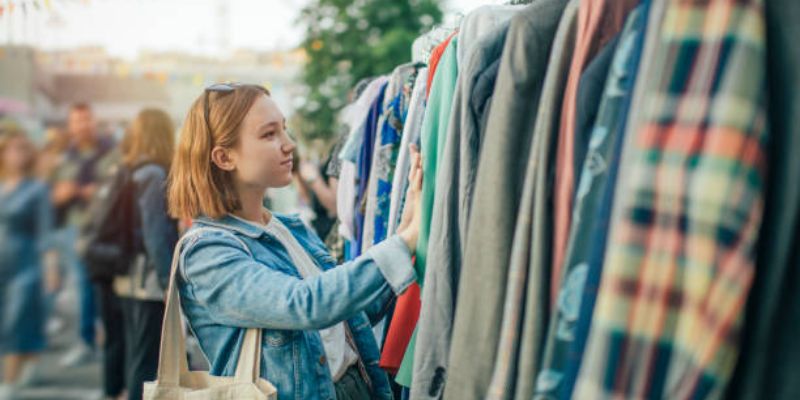
For younger shoppers, buying secondhand is not a compromise. It is an identity. It signals that you are not just consuming, you are curating. There is a real difference in how that feels.
A 2025 ThredUp report found that 62% of Gen Z and Millennials consider a brand's resale value before buying it new [2]. That is a complete inversion of how fashion worked a decade ago. Now the resale ecosystem shapes what people buy first.
Wearing something vintage or thrifted carries cultural weight. It says something about taste in a way that a straight-from-the-retailer purchase often does not.
3. Resale Platforms Got Serious About the Experience
The early days of secondhand fashion online were chaotic. Poshmark, Depop, and eBay listings were often blurry, inconsistently sized, and difficult to search. That friction kept a lot of buyers away.
That has changed significantly. Depop now has standardized size guides and stricter listing requirements. ThredUp uses AI to sort and price items. The RealReal employs in-house authenticators for luxury goods. The process of buying secondhand feels much closer to buying new.
When the experience is smooth, trust builds. And trust is what turns casual browsers into repeat buyers who prefer secondhand over retail by default.
4. The Price Gap Is Getting Harder to Ignore
Retail prices have climbed steadily since 2022. A basic linen shirt from a mid-range brand now costs what a quality vintage blazer used to cost. Shoppers have noticed that math does not add up in retail's favor anymore.
Secondhand fashion offers real price advantages that compound over time. A vintage Levi's jacket bought for $35 holds its resale value. A fast fashion version bought for $45 does not. For anyone paying attention, the economics of pre-owned clothing are becoming genuinely attractive.
This is not about shopping cheaply. It is about shopping smart. And that reframe has opened secondhand fashion to buyers who would have never considered it before.
5. Sustainability Stopped Being a Buzzword and Became a Buying Filter
There was a period when sustainability in fashion felt performative. Brands slapped green labels on things and called it a strategy. Shoppers got tired of it fast.
What shifted is that secondhand fashion offers something concrete. Buying a used garment requires no new water, no new dye, no new manufacturing labor. The environmental benefit is immediate and real, not aspirational. The EPA estimates that Americans throw away approximately 11.3 million tons of textile waste per year [3]. Secondhand shopping directly interrupts that cycle.
Buyers who care about this do not need to be convinced by marketing copy. The logic is obvious. That clarity has made secondhand fashion one of the few spaces where sustainability and style reinforce each other without feeling forced.
6. Vintage Has Become Its Own Aesthetic Category
Ten years ago, vintage meant grandma's closet or a specific subculture. That association is completely gone. Vintage is now its own aesthetic with its own rules, its own icons, and its own micro-trends moving at the same speed as mainstream fashion.
The Y2K revival, the quiet luxury wave, and the gorpcore trend all pulled heavily from secondhand and vintage sourcing. Stylists for major celebrities regularly source vintage pieces before considering new options. What was once a creative workaround became the creative standard.
Secondhand fashion does not borrow from real fashion anymore. In many spaces, it is defined.
7. Influencers Built Entire Audiences Around the Thrift
There is a specific kind of influencer who grew almost entirely on the back of secondhand fashion content. They film thrift hauls, do before-and-after reworks, walk through flea markets in real time, and take their audiences along for finds that feel genuinely exciting.
What makes this content work is that it cannot be faked or sponsored in the same way a traditional brand deal can. You either find something or you do not. That unpredictability creates real tension, and real tension keeps people watching.
Secondhand fashion content has an authenticity advantage that paid partnerships simply cannot replicate. And for creators, that authenticity is an audience-building engine.
8. Reselling Turned Closets Into Side Incomes
The secondhand fashion market is not just a place where people shop. For a growing number of people, it is where they work. Reselling vintage and thrifted clothing has become a legitimate income stream, with some full-time resellers reporting monthly revenue well above $5,000.
That economic opportunity has brought a new kind of buyer into secondhand fashion: the entrepreneurial one. They thrift with intention, photograph with skill, and price with knowledge. Their listings raise the overall quality of what is available online.
When the ecosystem attracts people who are genuinely invested in it, the whole market gets better. That feedback loop is a big part of why secondhand fashion keeps growing.
9. Luxury Resale Normalized the Entire Category
It would be hard to overstate the impact that luxury resale has on how people think about secondhand fashion broadly. When The RealReal made it socially acceptable to buy a used Gucci bag, it did something quiet but powerful: it removed the stigma from used clothing entirely.
If someone is successful enough to own designer goods and is also comfortable buying them secondhand, the whole concept of pre-owned shifts. It is no longer a last resort. It is a discerning choice.
That trickle-down effect reached every price point in the secondhand market. Once secondhand luxury was cool, secondhand everything followed.
10. Physical Thrifting Drove People Online
There is a real irony at the center of secondhand fashion's online boom. A lot of it started in physical thrift stores. People who discovered thrifting in person eventually wanted more selection, better sourcing, and the ability to shop without driving across town.
Online secondhand platforms gave those buyers exactly what they wanted. The in-person experience created the appetite. The digital platforms satisfied it at scale.
That two-stage adoption pattern means online secondhand fashion has a built-in funnel. Every person who has a great thrift store experience is a potential platform user. That pipeline is enormous and largely untapped outside major cities.
11. The Drop Model Moved Into Secondhand Fashion
Retailers trained a generation of shoppers to feel urgency around drops. Limited releases, countdown timers, and scarcity signals became standard tools in the fashion marketing playbook.
Secondhand fashion has those properties built in by default. Every piece is one of a kind. Every listing that sells is gone forever. That natural scarcity creates the same urgency as a sneaker drop, without any brand having to manufacture it artificially.
For shoppers who got conditioned by streetwear and limited retail releases, secondhand fashion scratches exactly the same itch. The thrill of finding something before someone else does is a real emotional driver, and it is available every time someone opens Depop.
What Comes Next Is Not a Correction
Some market observers have suggested that secondhand fashion is a trend with an expiration date. The data does not support that. Platform user numbers, resale market growth projections, and the demographics of who is buying all point in the same direction.
The generation that grew up with secondhand fashion as a normal, desirable option is just now entering its peak spending years. They are not going to age out of it. If anything, they will spend more.
Secondhand fashion is not a moment. It is a structural shift in how a significant portion of the population thinks about clothes, value, and ownership. If you have not started shopping this way, the platforms are better than they have ever been. Start with what you actually need, and let the search be part of the experience.
References
[1] The Resale Report 2025 – https://www.thredup.com
[2] ThredUp Annual Resale Report – https://www.thredup.com
[3] Textiles: Material-Specific Data – https://www.epa.gov
Related Posts
Jewelry for Casual Outfits A Practical Guide to Elevating Everyday Style with Simple Accessories
Pack Light, Leave a Lighter Footprint: The Best Sustainable Luggage
Is Resale Fashion Better Than Fast Fashion? Full Comparison
Eco-Friendly Fabric: How To Wash And Maintain Clothes Sustainably
Eco-Friendly Fabric Coloring: Exploring Natural And Plant-Based Dyes